Background
Already in 1993, when the former military barracks area was squatted and the Metelkova mesto was subsequently formed, members of KUD Sestava (which was formalised as an association for culture in 1997) were working to establish a hostel there. They set their eyes on a former military prison building, and in the early 2000s, they managed to get this project started.
KUD Sestava led the renovation, with the architect – and the head of the Sestava association – Janko Rožič responsible for the planning. In the process they invited around 80 artists to shape and design the newly founded Celica Hostel. It opened its doors in 2003 and soon after, the association began running its regular programme of events and exhibitions.
Programme
The activities of KUD Sestava are mainly tied to the Celica Hostel, of which an integral part is the gallery Srečišče. Here, at least one exhibition per month is set up, presenting artists of various mediums and persuasions. Some of them were Mitja Ficko, Mirko Malle, Serafina Loszach, Tomaž Gorjup, Rajko Korbar, Mileta Postić and Jindřich Štreit. Featured were also the works of Anna Watzinger, at that time hosted by KUD Mreža at its Asylum Studio.
Aside from exhibitions, the gallery is used for regular film screenings, contemporary dance events (hosting, for example, another Asylum resident, the dancer Naoko Maeshiba) and numerous poetry and literature readings, round tables (on humanities, culture, art, politics), storytelling evenings, lectures on science (from history to biology), and so on.
Music
The main part of the music programme is a series of weekly events called Sozvočja sveta (Chords of the Worlds), held from the year 2003 onwards. It runs a very strong line up of mainly Slovenian bands, predominately those of ethno and jazz aesthetics. One can here mention Bojan Cvetrežnik, Janez Dovč, Boštjan Gombač, Marko Hatlak and Samo Kutin – all have played with their respective bands and often also in various ad hoc collectives. These gigs tend to be followed by jam sessions, which sometimes also accompany literary evening and other events.
Amongst other music related happenings, there are music workshops for non-musicians, of which a recent example is a project done together with the Folk Slovenia Cultural Society. Focused on folk music and folk singing, it is dealing with vernacular musics of various Slovene minorities as well as with songs from countries like Bulgaria and Sri Lanka.
See also
- Celica Hostel
- Asylum Studio
- Godibodi Festival
- KUD Mreža Arts and Culture Association
- Metelkova mesto Autonomous Cultural Zone
- Folk Slovenia Cultural Society
External links
- KUD Sestava website
- KUD Sestava events at Allevents
- 3D pictures of all the rooms in the Celica Hostel
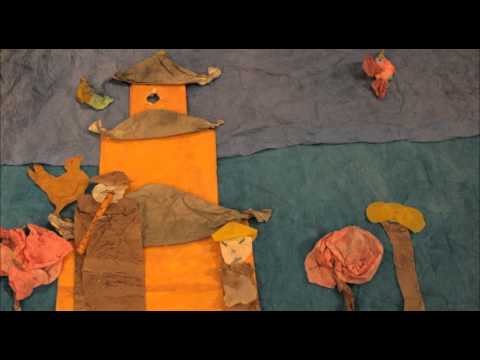
- Animated films, created at workshops organised project Sestava